
Why Every Construction Site Needs an Industrial Scaffolding Safety Checklist
Construction projects involve working at significant heights, handling heavy materials, and coordinating multiple workers simultaneously. Under these conditions, scaffolding safety is not optional—it is essential.
A properly installed and regularly inspected scaffolding system reduces accidents, improves productivity, and helps projects stay on schedule. Whether you’re working on a residential tower, industrial plant, bridge, refinery, or commercial building, following a structured safety checklist protects both workers and equipment.
If you’re sourcing scaffolding from a trusted Scaffolding Manufacturer in Madhya Pradesh, choosing high-quality systems is the first step toward creating a safer workplace. M.B. Tubes manufactures steel scaffolding solutions such as Cuplock Scaffolding, H Frame Scaffolding, Base Jacks, Prop Jacks, and Scaffolding Accessories, designed for demanding construction environments.
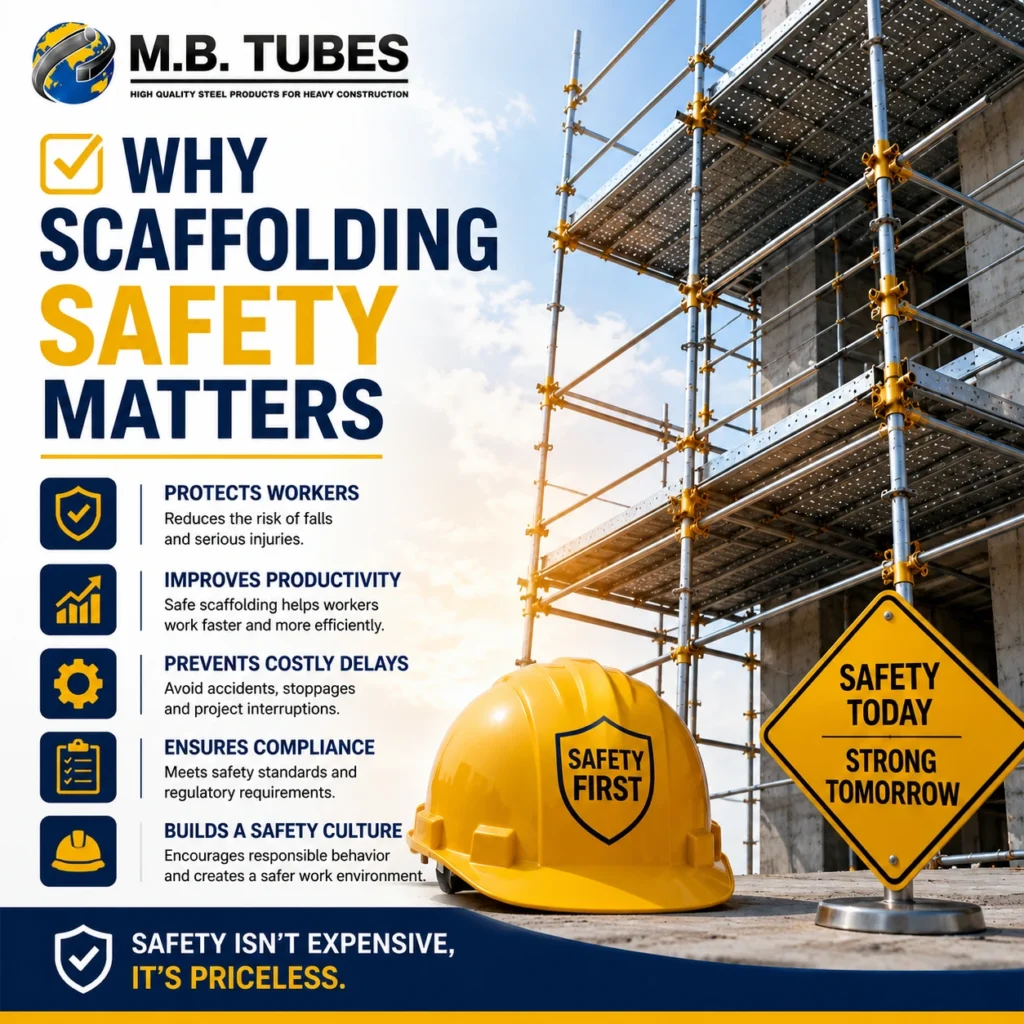
✅ Why Scaffolding Safety Matters
Ignoring scaffolding safety can result in:
- Worker injuries
- Project delays
- Equipment damage
- Higher maintenance costs
- Legal and compliance issues
- Reduced productivity
A daily inspection checklist helps identify problems before they become serious hazards.
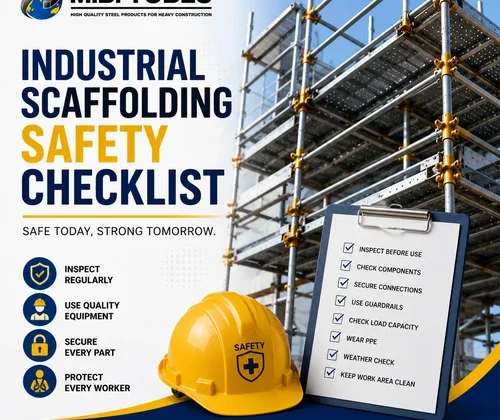
📋 Industrial Scaffolding Safety Checklist
🏗️ 1. Inspect the Foundation
Before installation, verify that the scaffold is erected on a stable and level surface.
✔ Firm ground support
✔ Proper base plates installed
✔ Adjustable base jacks correctly positioned
✔ No loose soil or waterlogging
🔩 2. Check All Scaffolding Components
Inspect every component before use.
Look for:
- Bent steel tubes
- Cracked welds
- Damaged couplers
- Rust or corrosion
- Loose locking mechanisms
- Missing components
Replace damaged parts immediately.
⚙️ 3. Verify Proper Assembly
Ensure the scaffolding has been assembled according to the manufacturer’s recommendations.
Check:
✔ Standards
✔ Ledgers
✔ Transoms
✔ Braces
✔ Guardrails
✔ Locking systems
Incorrect assembly significantly increases the risk of collapse.
🛡️ 4. Install Guardrails and Toe Boards
Guardrails help prevent falls, while toe boards stop tools and materials from falling.
Every working platform should include:
- Top guardrail
- Mid guardrail
- Toe board
- Safe access point
🪜 5. Ensure Safe Access
Workers should never climb the scaffold frame itself.
Provide:
- Access ladders
- Stair towers
- Secure entry points
- Slip-resistant platforms
⚖️ 6. Never Overload the Scaffold
Every scaffold has a maximum load capacity.
Avoid placing excessive:
- Steel materials
- Concrete
- Equipment
- Workers
- Tools
Overloading reduces structural stability.
🌬️ 7. Inspect Weather Conditions
Before work begins, inspect environmental conditions.
Avoid using scaffolding during:
- Heavy rainfall
- Strong winds
- Thunderstorms
- Lightning
- Poor visibility
Wet platforms also increase slipping hazards.
🔧 8. Check Base Jacks and Prop Jacks
Properly installed Base Jacks and Prop Jacks provide stable support.
Inspect:
✔ Thread condition
✔ Locking mechanism
✔ Height adjustment
✔ Load-bearing alignment
👷 9. Personal Protective Equipment (PPE)
Every worker should wear appropriate PPE.
Essential equipment includes:
- Safety helmet
- Safety harness
- Non-slip safety shoes
- Reflective jacket
- Gloves
- Eye protection
📅 10. Conduct Daily Scaffolding Inspections
Inspect scaffolding:
- Before each work shift
- After heavy rain
- After strong winds
- After structural modifications
- Before allowing workers to climb
Maintain inspection records for safety compliance.
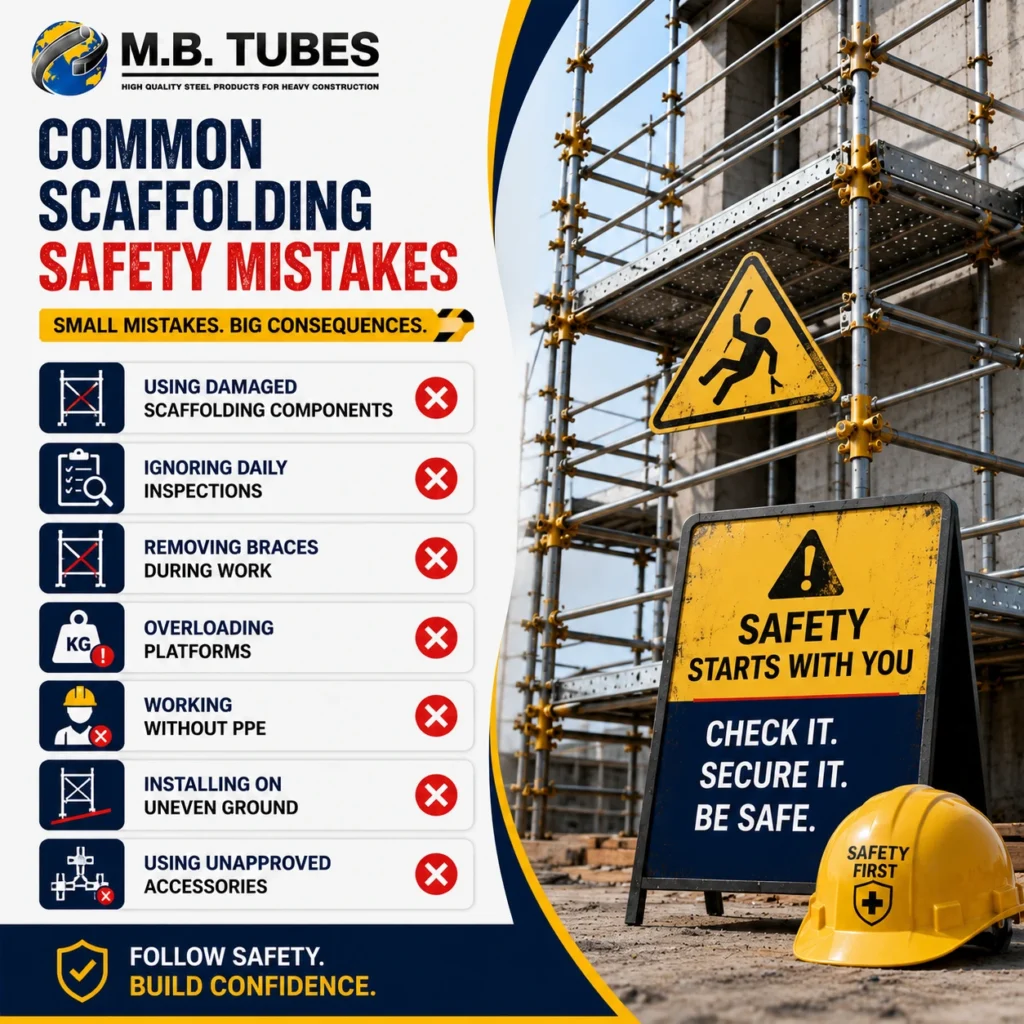
⚠️ Common Scaffolding Safety Mistakes
Avoid these common errors:
❌ Using damaged scaffolding components
❌ Ignoring daily inspections
❌ Removing braces during work
❌ Overloading platforms
❌ Working without PPE
❌ Installing scaffolding on uneven ground
❌ Using unapproved accessories
Preventing these mistakes significantly reduces workplace risks.
🏭 Choosing Quality Scaffolding Makes Safety Easier
The safest construction sites start with reliable equipment.
Professional contractors prefer scaffolding manufactured using:
- Premium-grade steel
- Precision engineering
- High load-bearing capacity
- Accurate dimensions
- Durable locking systems
As a trusted Scaffolding Manufacturer in Madhya Pradesh, M.B. Tubes supplies industrial scaffolding systems designed for safety, durability, and efficient installation across residential, commercial, and infrastructure projects. The company manufactures Cuplock Scaffolding, H Frame Scaffolding, Base Jacks, Prop Jacks, and a complete range of scaffolding accessories.
⭐ Why Contractors Trust M.B. Tubes
Builders and infrastructure companies choose M.B. Tubes because of:
✔ Premium Steel Quality
✔ Precision Manufacturing
✔ Industrial-Grade Performance
✔ High Safety Standards
✔ Fast Installation
✔ Competitive Pricing
✔ Reliable Delivery
✔ Complete Scaffolding Solutions
📌 Final Thoughts
A comprehensive Industrial Scaffolding Safety Checklist is one of the most effective ways to create a safer construction site. Regular inspections, proper installation, quality components, and trained workers all contribute to reducing accidents and improving project efficiency.
By partnering with an experienced Scaffolding Manufacturer in Madhya Pradesh, construction companies can ensure that every scaffolding system meets the strength, stability, and safety requirements needed for modern projects. High-quality scaffolding not only protects workers but also supports faster project completion and long-term cost savings.