
Scaffolding is one of the most important temporary support systems used in construction, maintenance, infrastructure, and industrial projects. It provides workers with a stable platform to perform tasks safely at different heights. However, selecting the correct scaffolding size is just as important as choosing high-quality materials.
Whether you’re constructing a residential building, commercial complex, bridge, factory, or industrial plant, understanding the standard size of scaffolding helps improve safety, productivity, and project efficiency.
If you’re searching for a trusted Scaffolding Manufacturer in Madhya Pradesh, knowing the right scaffolding dimensions will help you make an informed decision.
Why Scaffolding Size Matters
The size of scaffolding directly affects:
- Worker safety
- Load-bearing capacity
- Ease of movement
- Construction speed
- Project efficiency
- Material handling
- Overall structural stability
Using scaffolding with incorrect dimensions can reduce productivity and increase safety risks. Choosing the right configuration ensures a smoother and safer construction process.
What Are the Standard Sizes of Scaffolding?
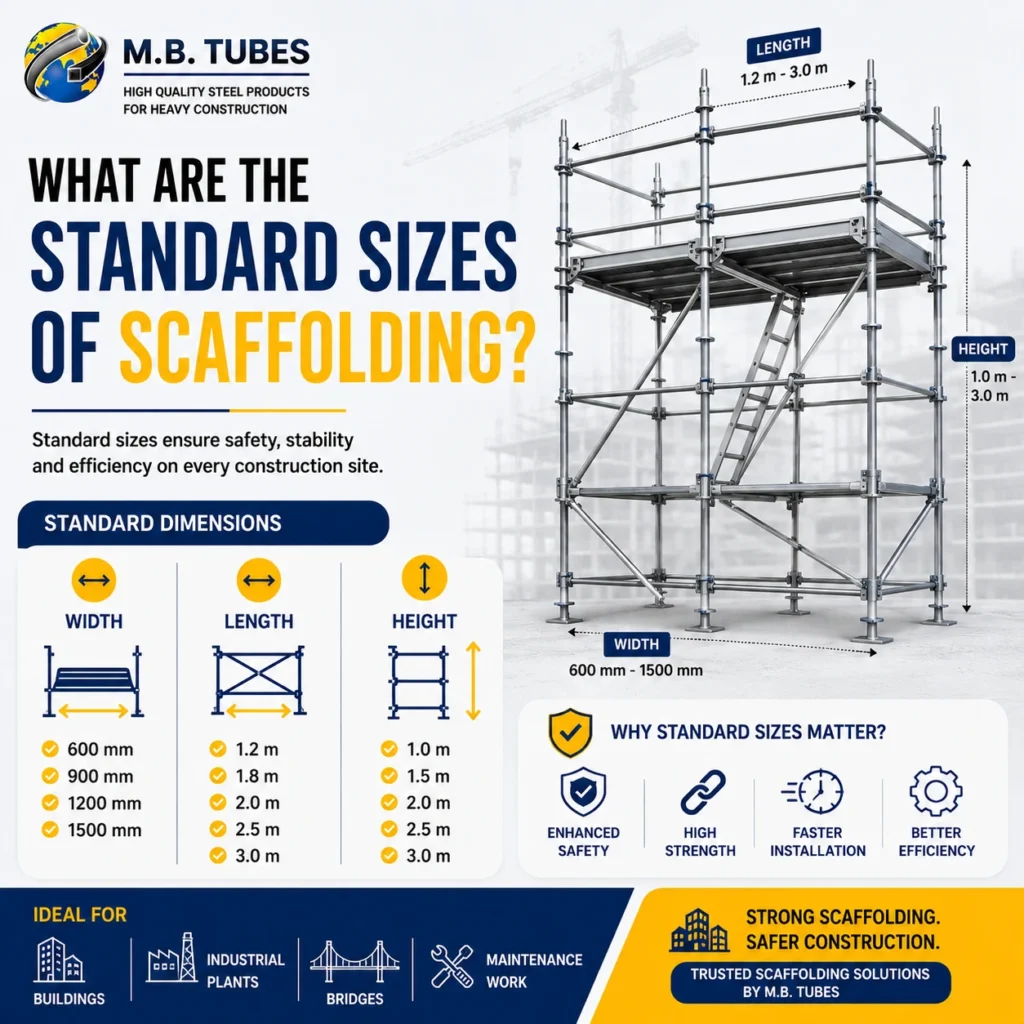
Scaffolding systems come in different sizes depending on the project type, building height, and application. While custom dimensions are available, most manufacturers follow industry-standard measurements.
Standard Width
Typical platform widths include:
- 600 mm
- 900 mm
- 1200 mm
- 1500 mm
Wider platforms are generally used for industrial construction where workers and materials require additional working space.
Standard Length
Common scaffold bay lengths include:
- 1.2 meters
- 1.8 meters
- 2.0 meters
- 2.5 meters
- 3.0 meters
The length is selected according to the building layout and project requirements.
Standard Height
Scaffolding can be erected to virtually any required height using modular components. However, the vertical standards generally come in:
- 1.0 Meter
- 1.5 Meter
- 2.0 Meter
- 2.5 Meter
- 3.0 Meter
These components are connected securely to achieve the desired working height.
Platform Height
The working platform is usually installed at intervals of:
- 2.0 meters
- 2.5 meters
This provides workers with safe and convenient access throughout the project.
Types of Scaffolding and Their Dimensions
H-Frame Scaffolding
Widely used for residential and commercial construction.
Features include:
- Quick assembly
- High stability
- Multiple height options
- Ideal for plastering, painting, and masonry work
Cuplock Scaffolding
Preferred for industrial and infrastructure projects.
Advantages:
- Modular locking system
- High load-bearing capacity
- Faster installation
- Flexible working heights
MS Pipe Scaffolding
A versatile system commonly used for maintenance and repair work.
Benefits include:
- Easy fabrication
- Cost-effective
- Strong structural support
- Suitable for customized layouts
Factors That Determine the Right Scaffolding Size
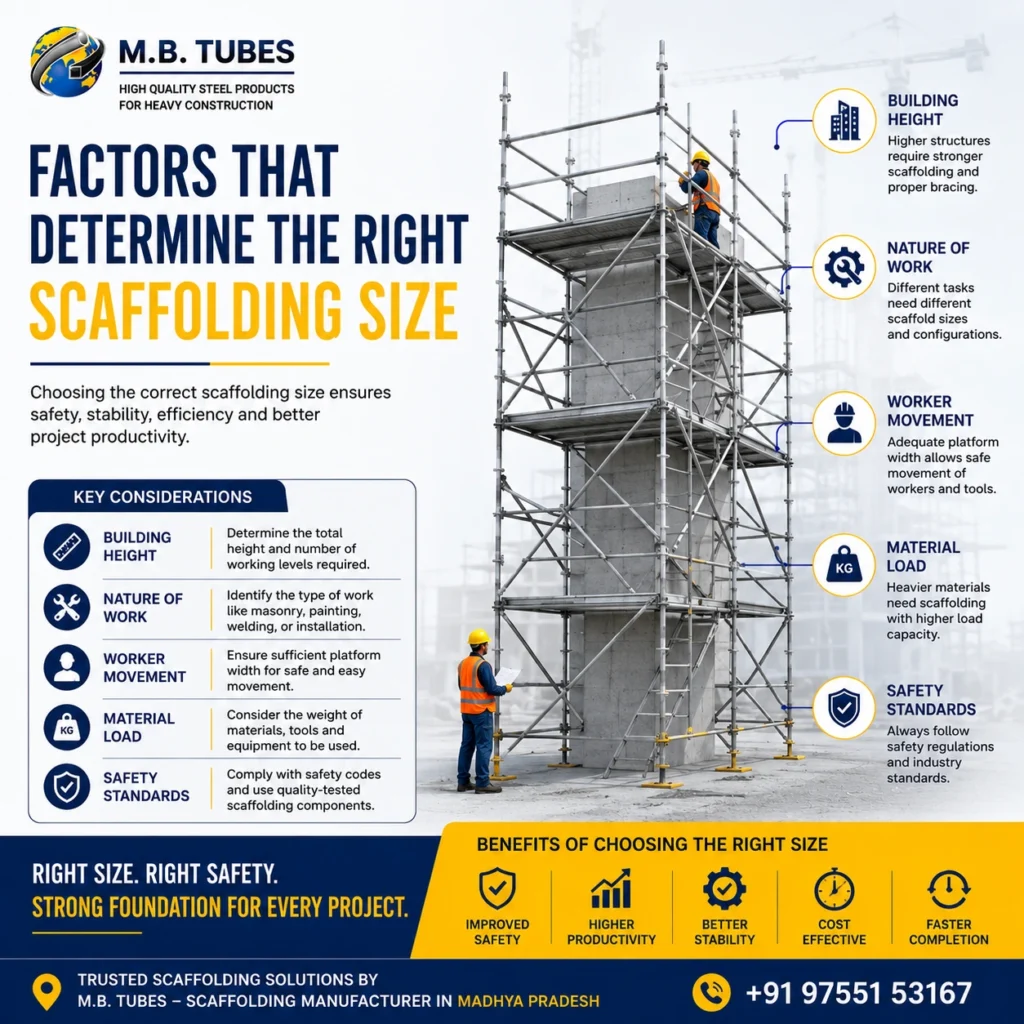
Selecting the correct scaffolding dimensions depends on several factors.
Building Height
Taller structures require stronger vertical support and proper bracing.
Nature of Work
Painting, plastering, welding, structural fabrication, and maintenance may require different scaffold sizes.
Worker Movement
Adequate platform width allows workers to move safely while carrying tools and materials.
Material Load
Heavy construction materials require scaffolding with higher load capacity and stronger components.
Safety Standards
Always choose scaffolding that complies with industry safety regulations and quality standards.
Benefits of Using Standard Scaffolding Sizes
Choosing standard dimensions offers several advantages:
Faster Installation
Standardized components fit together quickly, reducing installation time.
Better Safety
Proper dimensions provide a stable working platform and reduce accident risks.
Easy Material Availability
Standard-sized components are readily available, making replacements and extensions convenient.
Cost Savings
Standard systems reduce fabrication costs and simplify maintenance.
Higher Productivity
Workers can move comfortably, improving efficiency and reducing project delays.
Applications of Standard Scaffolding
Standard scaffolding systems are widely used in:
- Residential Buildings
- Commercial Complexes
- Industrial Plants
- Warehouses
- Factories
- Infrastructure Projects
- Bridges
- Power Plants
- Petrochemical Industries
- Maintenance Projects
Their adaptability makes them suitable for projects of all sizes.
Why Quality Matters More Than Size
While selecting the correct dimensions is important, the quality of the scaffolding system is equally critical.
A premium-quality scaffolding system provides:
- High-strength steel construction
- Precision engineering
- Excellent load capacity
- Corrosion resistance
- Long service life
- Reliable safety performance
Working with an experienced Scaffolding Manufacturer in Madhya Pradesh ensures that every component meets strict quality standards.
Why Choose M.B. Tubes?
M.B. Tubes is recognized as a trusted Scaffolding Manufacturer in Madhya Pradesh, supplying reliable scaffolding systems for construction and industrial applications.
Premium Steel Quality
Manufactured using high-grade steel for superior strength and durability.
Precision Manufacturing
Every component is engineered for accurate fitting and dependable performance.
Timely Delivery
Efficient logistics ensure projects stay on schedule.
Expert Technical Support
Professional guidance helps customers select the right scaffolding solution for every project.
Wide Product Range
Available products include:
- MS Scaffolding
- Cuplock Scaffolding
- H-Frame Scaffolding
- Walkway Planks
- Scaffolding Accessories
- Prop Jacks
- Shuttering Plates
Tips for Choosing the Right Scaffolding
Before purchasing scaffolding, consider:
- Project height
- Working load requirements
- Platform width
- Material quality
- Safety certifications
- Ease of assembly
- Manufacturer reputation
- After-sales support
Choosing the right scaffolding system improves productivity while ensuring maximum worker safety.
Conclusion
Understanding the standard size of scaffolding is essential for selecting the right system for your construction project. Standard dimensions improve safety, reduce installation time, and increase overall efficiency. However, size alone is not enough—the quality of the scaffolding system plays an equally important role.
If you’re looking for a dependable Scaffolding Manufacturer in Madhya Pradesh, M.B. Tubes offers premium-quality scaffolding solutions designed for strength, durability, and long-term performance. Whether your project involves residential construction, industrial infrastructure, or commercial development, choosing the right scaffolding system helps ensure safe and successful project execution.
Frequently Asked Questions (FAQs)
1. What is the standard width of scaffolding?
Standard scaffold platform widths typically range from 600 mm to 1500 mm, depending on the application.
2. What is the common length of scaffolding bays?
Standard bay lengths are generally 1.2 m, 1.8 m, 2.0 m, 2.5 m, and 3.0 m.
3. Which type of scaffolding is best for industrial construction?
Cuplock Scaffolding is widely preferred for industrial and infrastructure projects due to its high load capacity, modular design, and quick installation.
4. Why should I choose a trusted Scaffolding Manufacturer in Madhya Pradesh?
A reliable manufacturer provides premium-quality materials, precision-engineered components, safety-compliant products, timely delivery, and dependable technical support for long-lasting performance.